A steel workshop, rebuilt for the phone in the buyer’s pocket.
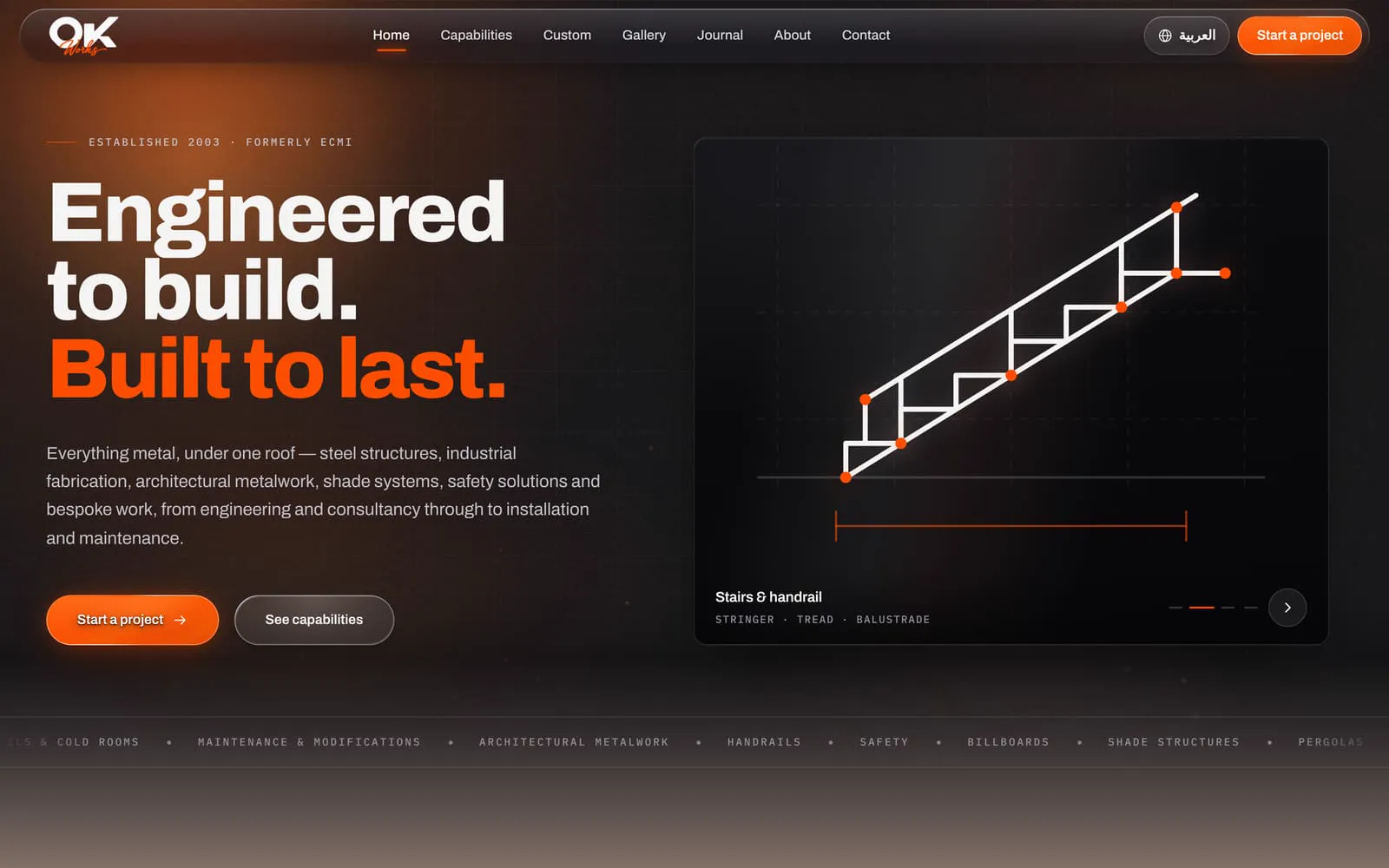
OK Works has fabricated steel in Egypt since 2003. We gave them a bilingual website built for phones first, real-time 3D that shows how steel is put together, two technical documents written by the site itself, and a back office the owner posts from. Eight weeks from first build to launch.
- Client
- OK Works, steel fabrication & custom manufacturing, Egypt
- Drawn by
- LÕKO.
- Dates
- 12 Sep – 6 Nov 2026
- Scale
- 390 px : 1
- Live
- okworks-eg.com
In numbers.
- weeks, first build to launch
- 8
- languages, with Arabic built right to left
- 2
- capabilities, each with its own page
- 13
- projects in the gallery, every photo the owner’s own
- 41
- PDFs generated from the site, in English and Arabic
- 4
Thirteen trades under one roof, explained in a few seconds.
OK Works makes steel structures, cladding, cold rooms, handrails, billboards, shade structures, pergolas, furniture and fall-protection systems. Its buyers are factory managers, logistics operators, developers and government bodies, and most of them meet the company for the first time on a phone, often in Arabic.
The site had to make a wide workshop easy to grasp, give the flagship safety product the weight the owner gives it, and keep working after we handed it over. That meant the owner had to be able to update it himself, and the sales documents had to stay in step with the website.
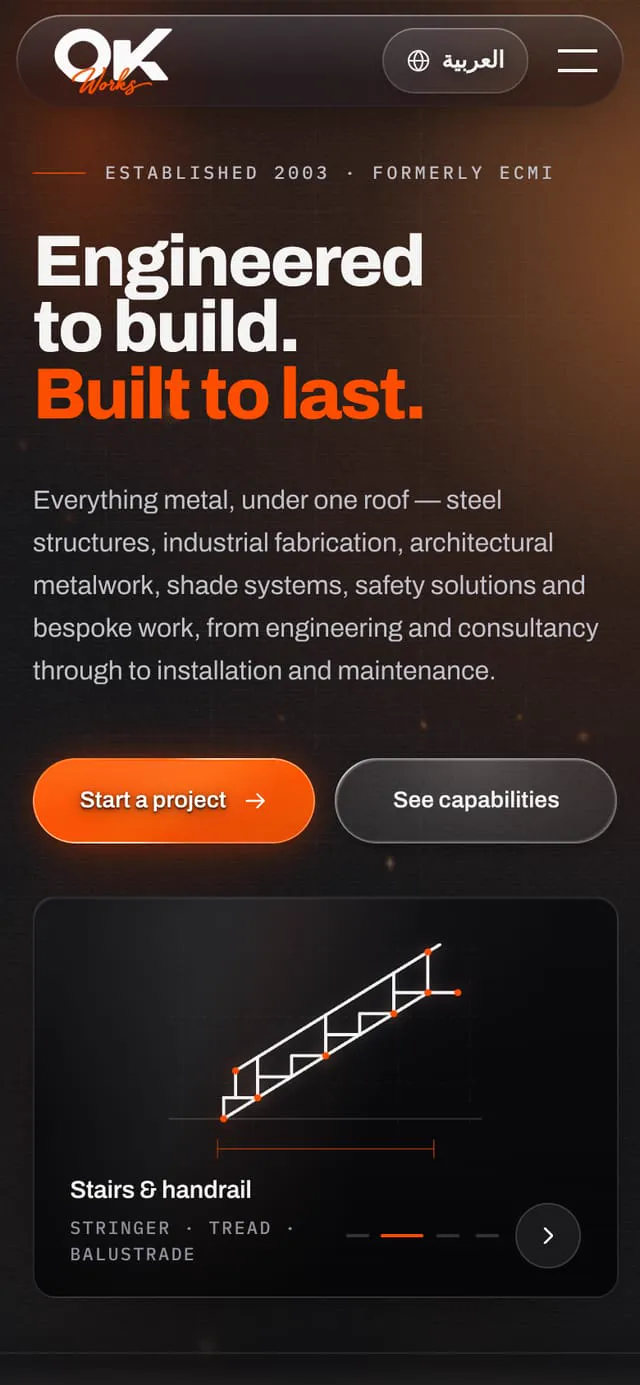
Designed at 390 pixels, then opened out.
Every page was composed for a phone first and widened for tablets and desktops afterwards. We measured the phone home page in screens and cut it from 16.3 to 13.8 by removing what it said twice.
The Arabic site is a full right-to-left build with its own typesetting, digits and line lengths. The Arabic copy was rewritten as Arabic, not translated word for word. English and Arabic live side by side in one place, so neither can quietly fall out of date.
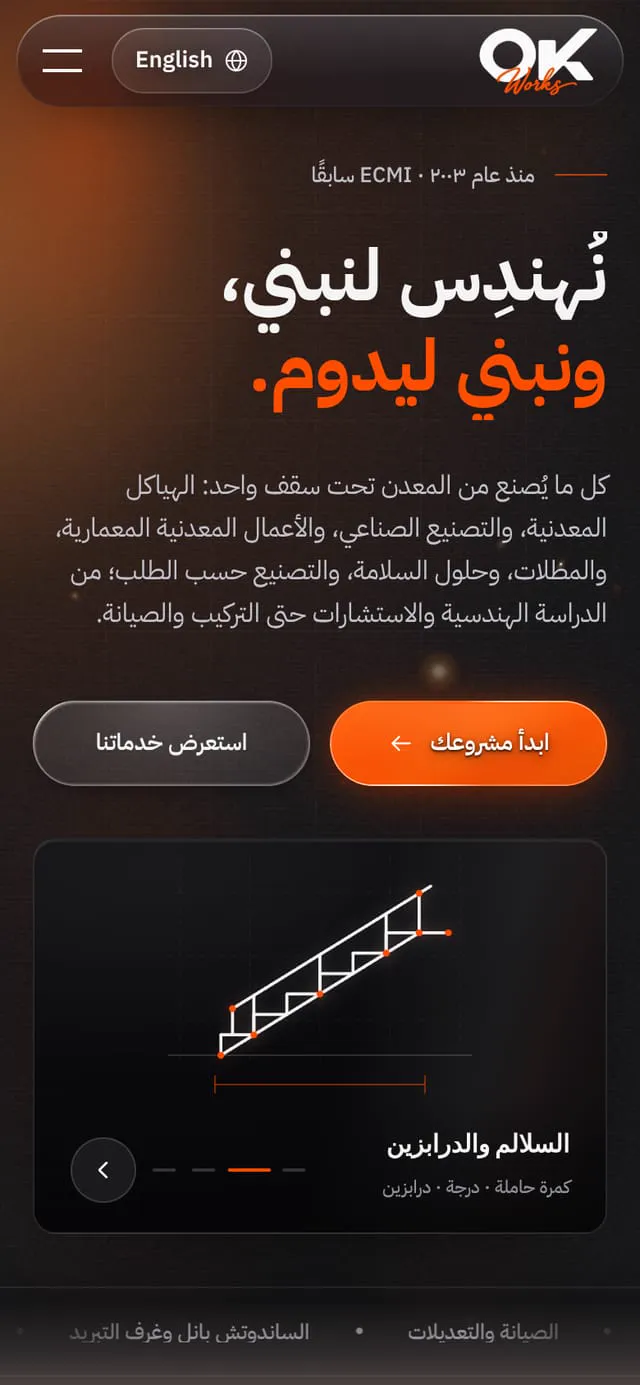
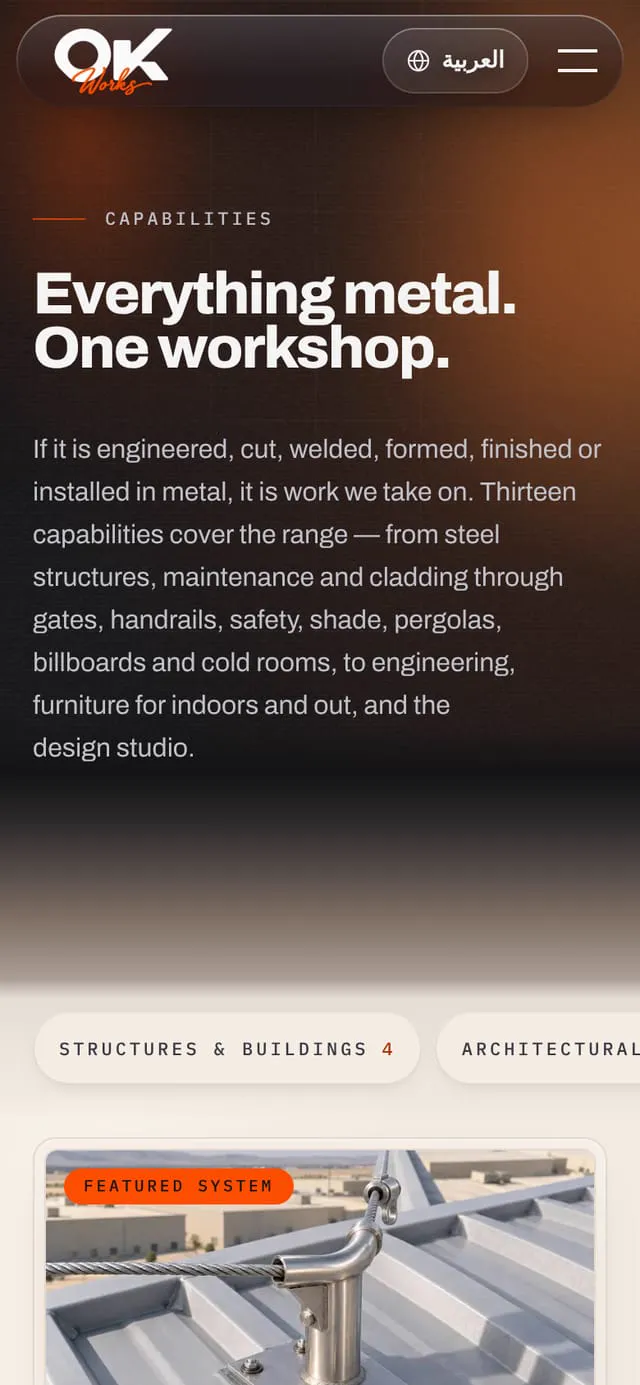
3D that shows how the steel goes together.
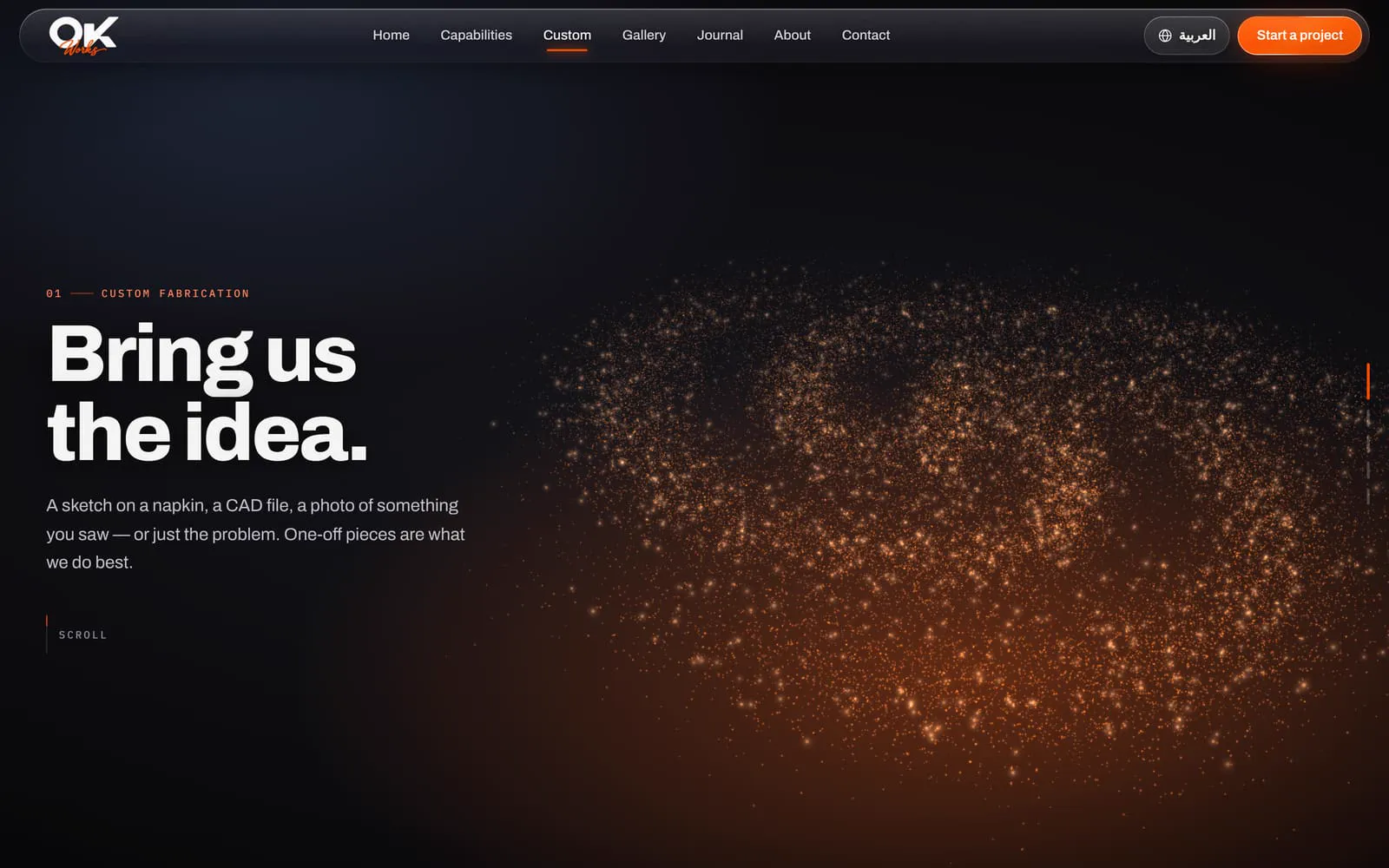
On the home page, line drawings of stairs, frames and canopies build themselves member by member. On the custom fabrication page, a field of sparks gathers into a finished piece: a sketch becoming steel.
The 3D engine loads only on the pages that use it, after the page is already on screen, and its resolution is capped on phones. Visitors on mobile data get the motion without waiting for it.
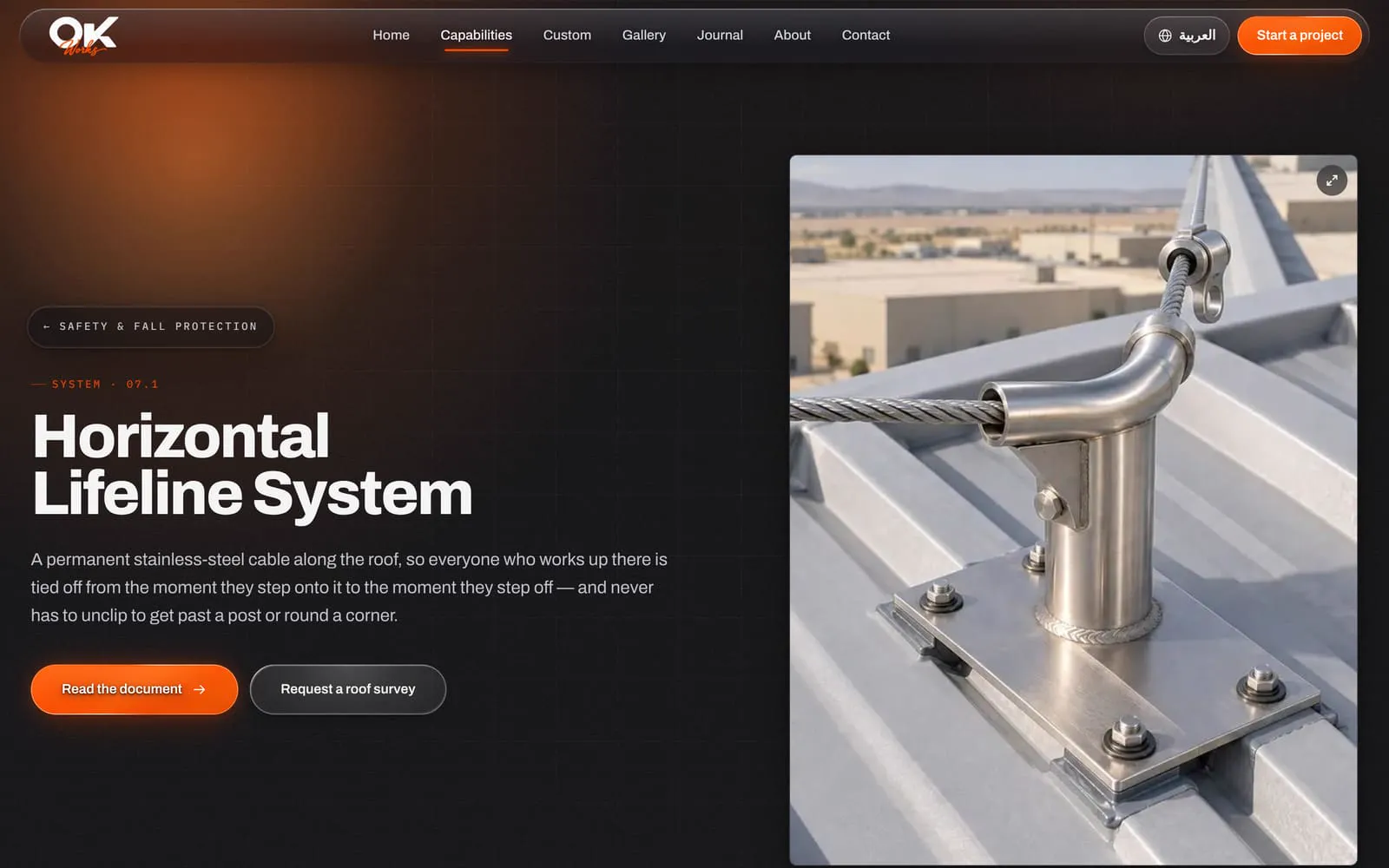
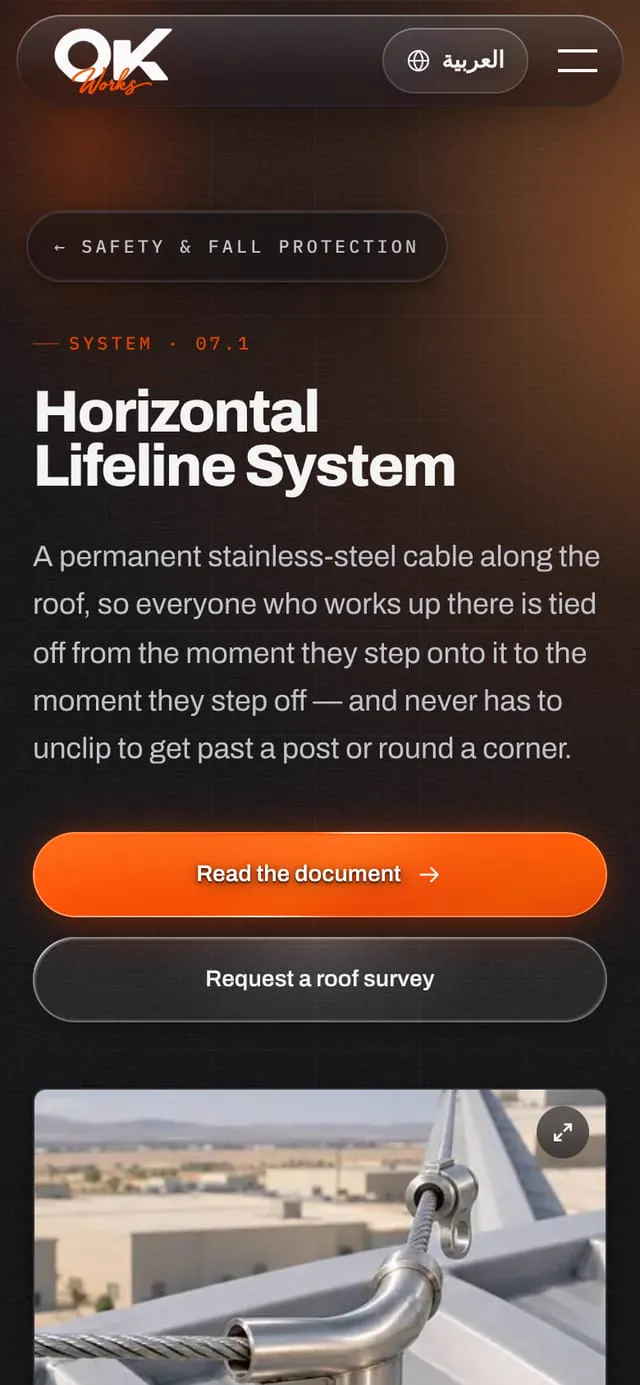
A safety system, given a page of its own.
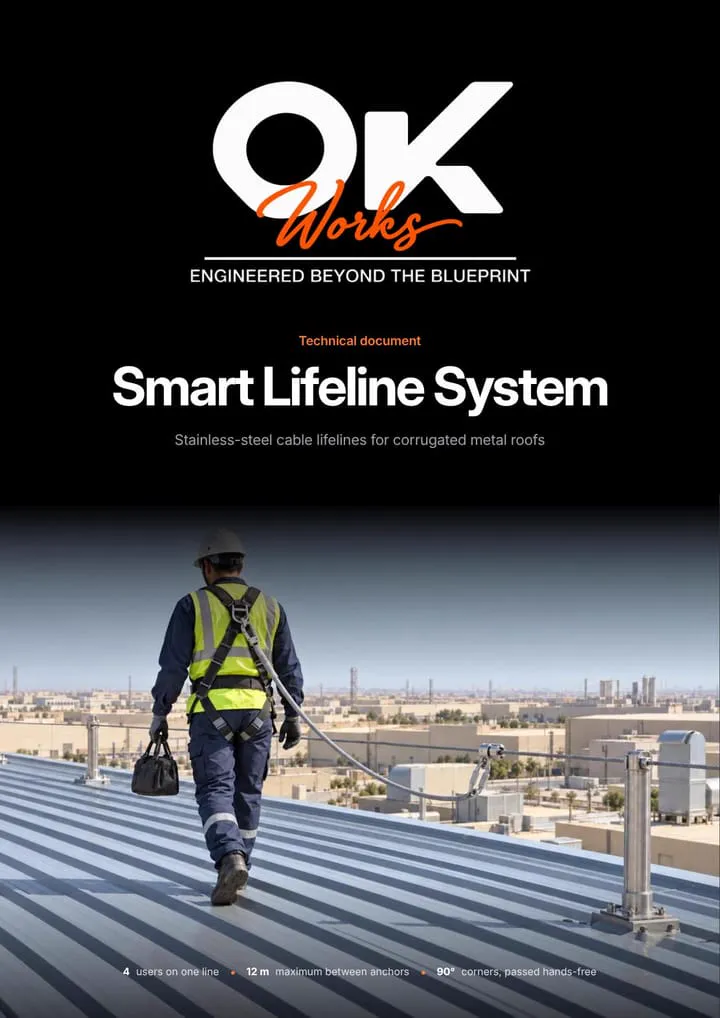
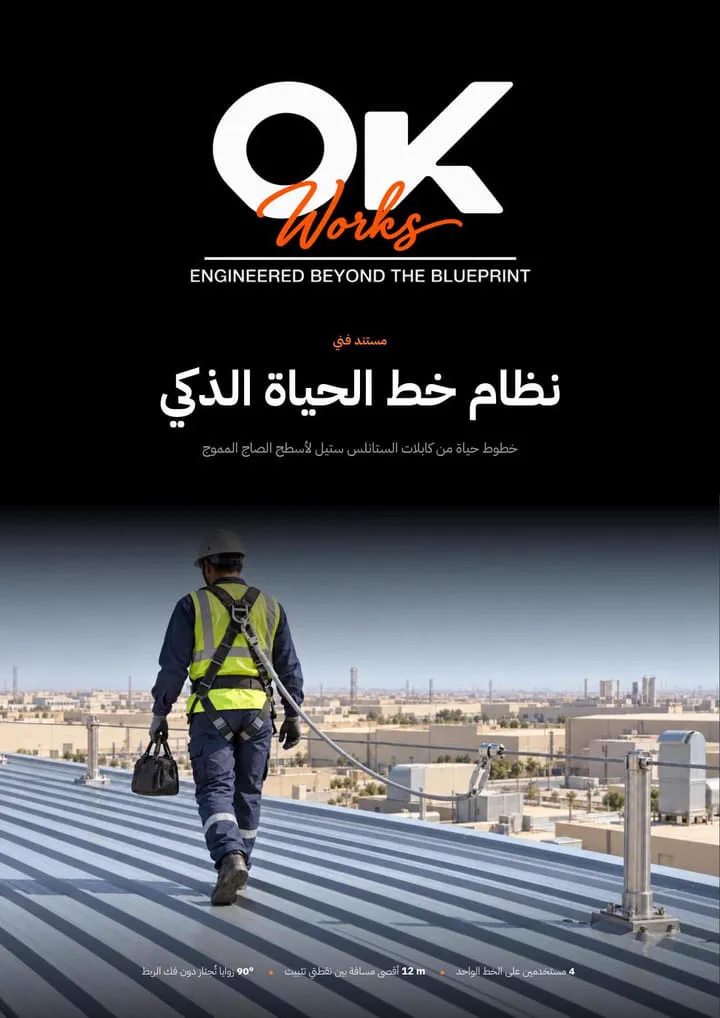
The Smart Lifeline System, a permanent fall-protection line for factory roofs, is the work the owner cares about most. It has its own page, with the figures a safety manager asks for first, and a technical document they can forward to their team.
- users per line
- 4
- between anchors
- 12 m
- corners, hands-free
- 90°
- minimum static load
- 12 kN
Sales documents written by the website.
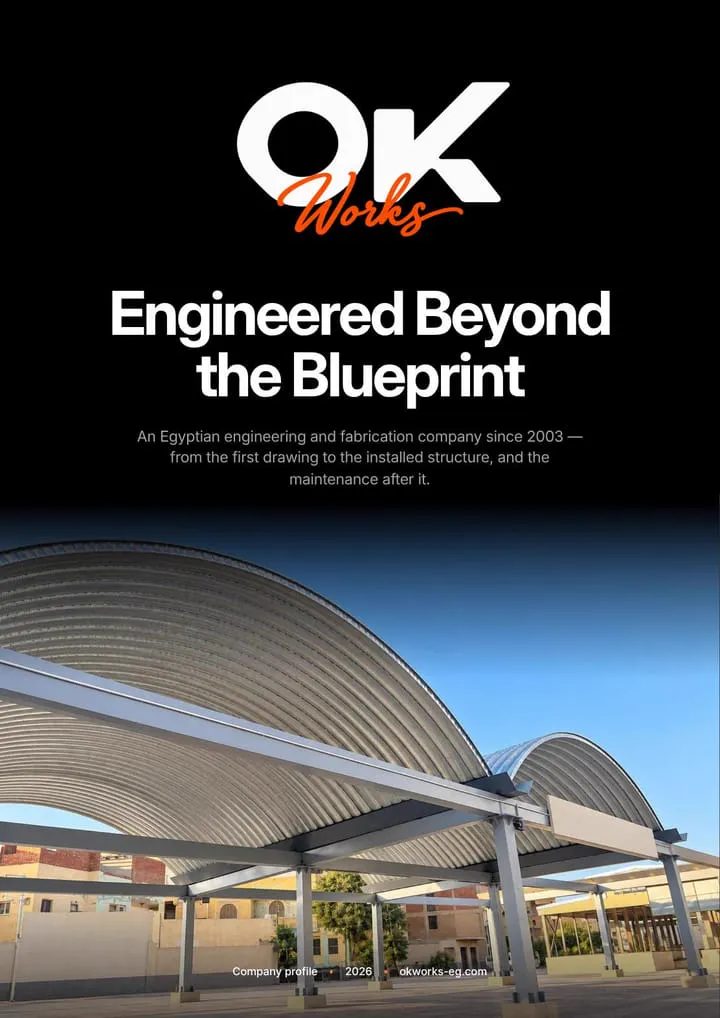
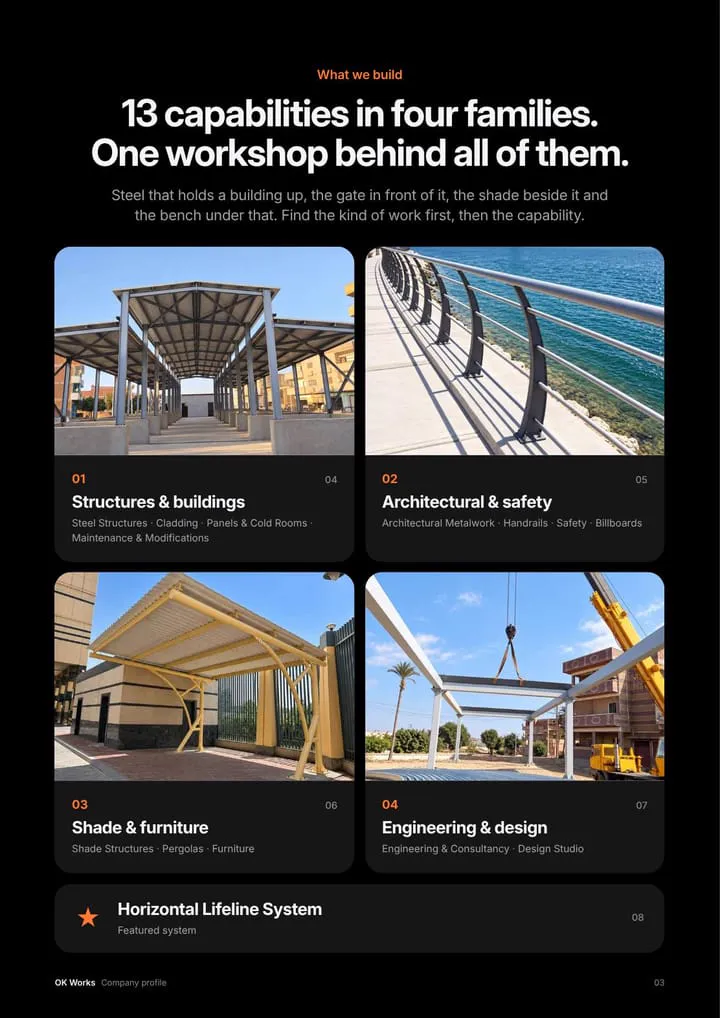
The 12-page company profile and the 9-page Smart Lifeline System document are generated from the same words, figures and photographs as the site, in English and Arabic. When a figure changes on the site, the PDFs change with it. The sales team never sends a brochure that disagrees with the website.
We proofed every page as iPhones and other non-Chrome viewers show it. Fades and gradient text that look right in a browser often break in those viewers, so we baked them into the images.
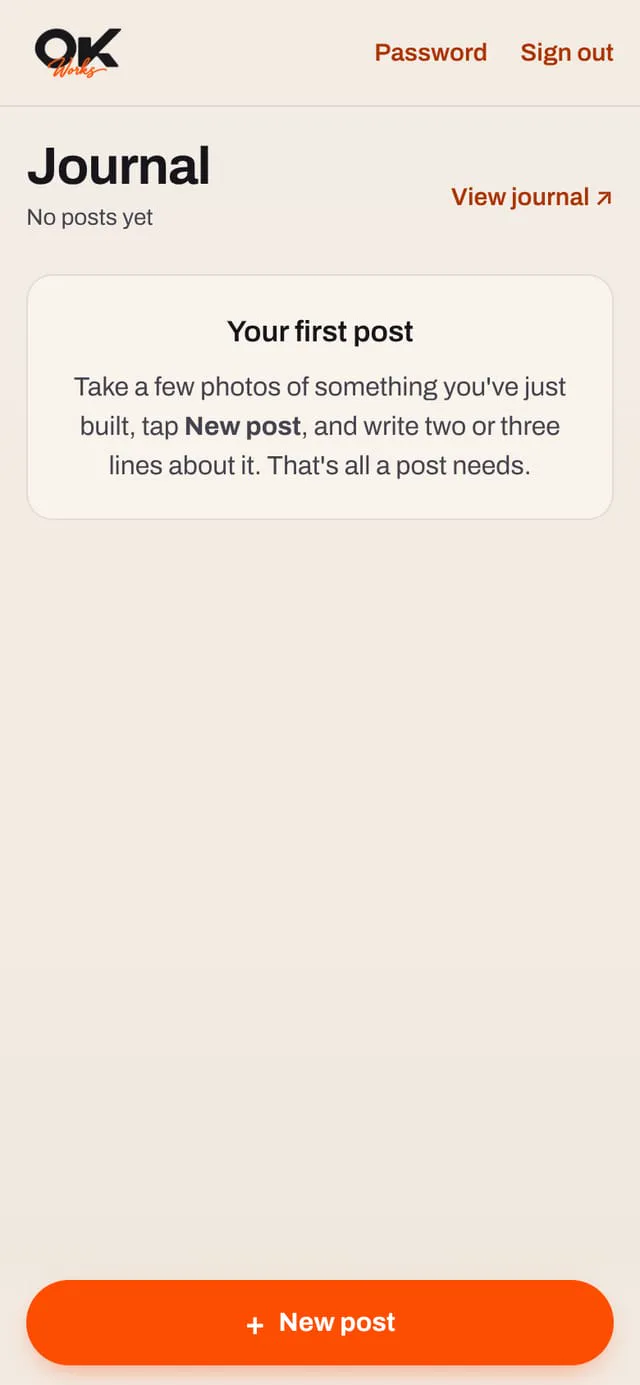
A journal the owner posts to from his phone.
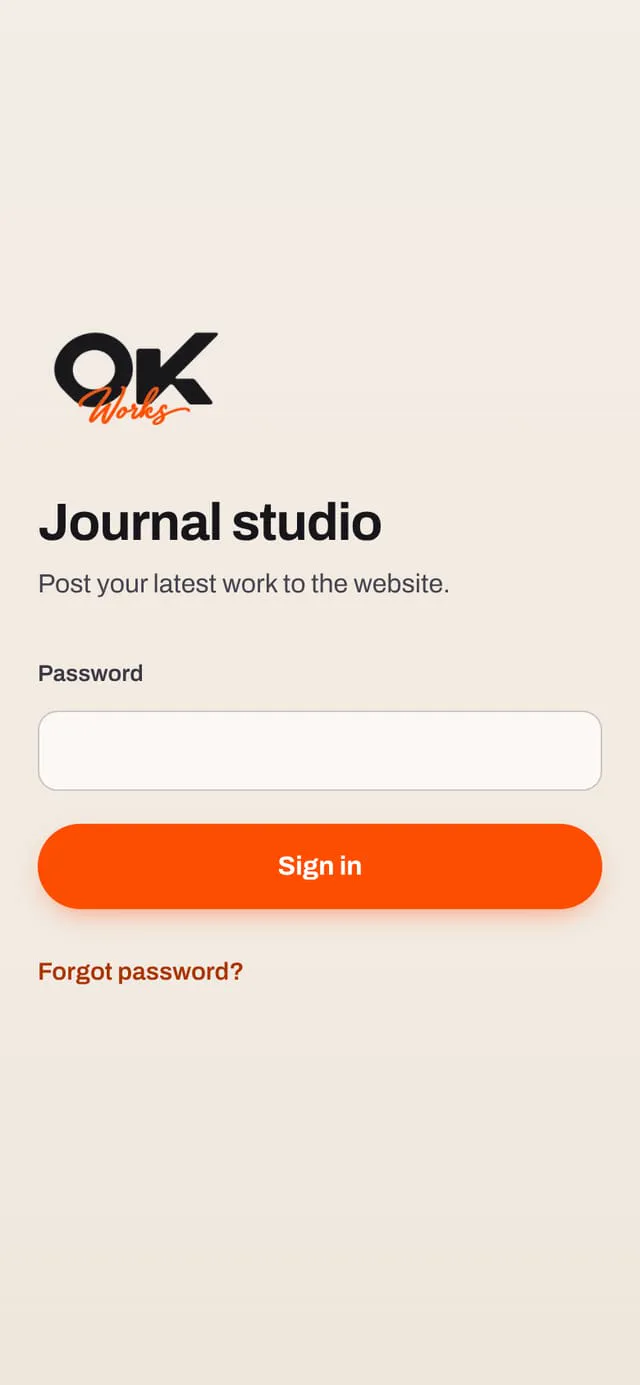
The Journal studio lets the owner publish finished jobs himself: a few photos, a title and a couple of lines in either language, posted in a minute. Posts appear on the site straight away and can be linked to the capability they show.
It is password-protected and signs other devices out when the password changes. A recovery key restores access if the password is forgotten. Two saves made at the same moment from two phones both survive.
Built to be found, and to bring in work.
Enquiries that arrive.
The brief form takes drawings and photos, filters spam, limits abuse and still works with JavaScript switched off. Messages reach the company inbox from its own domain, ready to reply to.
Search and sharing.
Search metadata, sitemaps and structured data in both languages. Every page has a share card, so a link sent on WhatsApp or LinkedIn shows a picture and a title.
Light on mobile data.
We cut 42 of 45 live blur effects to keep scrolling smooth on mid-range phones. Content is readable before any script runs, and every animation respects reduced-motion settings.
The launch, on film.
LÕKO. also made the motion pieces around the project.
Eight weeks, first build to launch.
-
12 Sep
First build of the bilingual site, with the 3D steel frame on the home page.
-
22 Sep
Real-time 3D on the custom fabrication page, and the home page composed for phones.
-
9 Oct
The owner’s own photographs on every capability, with before-and-after pairs.
-
10 Oct
The lifeline system gets its own page and technical document.
-
12 Oct
Company profile generated from the site, and the Arabic copy rewritten as Arabic.
-
2 Nov
Security review and framework upgrade before launch.
-
6 Nov
Live at okworks-eg.com, with enquiries sent from the company’s own domain.
Engineered beyond the blueprint.
That is OK Works’ promise to its customers. The site is built to keep it in front of them, in either language, on whatever phone they carry.
Visit okworks-eg.com- Bilingual website, English and Arabic, built right to left
- Phone-first design across every page
- A page for each of the 13 capabilities
- Real-time 3D on the home and custom fabrication pages
- Company profile and Smart Lifeline System PDFs, generated from the site
- Journal studio back office for the owner
- Brief form with file uploads and spam filtering
- Search metadata, sitemaps and structured data in both languages
- Case study film, launch trailer and collaboration film
Let's talk about
a project like this.
Or read the frequently asked questions first — process, timelines, and what a build costs.